It's hard to believe nowadays that there was a time where the launch of an second, ongoing title for the Avengers was a significant event. In the Twenty-First Century, we've had New Avengers, Dark Avengers, Mighty Avengers and Savage Avengers. But the Englehart/ Milgrom West Coast Avengers of the mid-80s was a series where I never missed an issue. It still surprises me because I didn't care at all for Al Milgrom's stiff cartooning and tiny figurework in early 80s Avengers. But I preferred Steve Englehart's grasp of relationships and history to the dry, problem-solving, technical style of Roger Stern. Englehart called his seat-of-the-pants writing style "organic" and sometimes it was hard to find the sense in his melodramatic dialogue but he tried to empower his characters and give them agency.
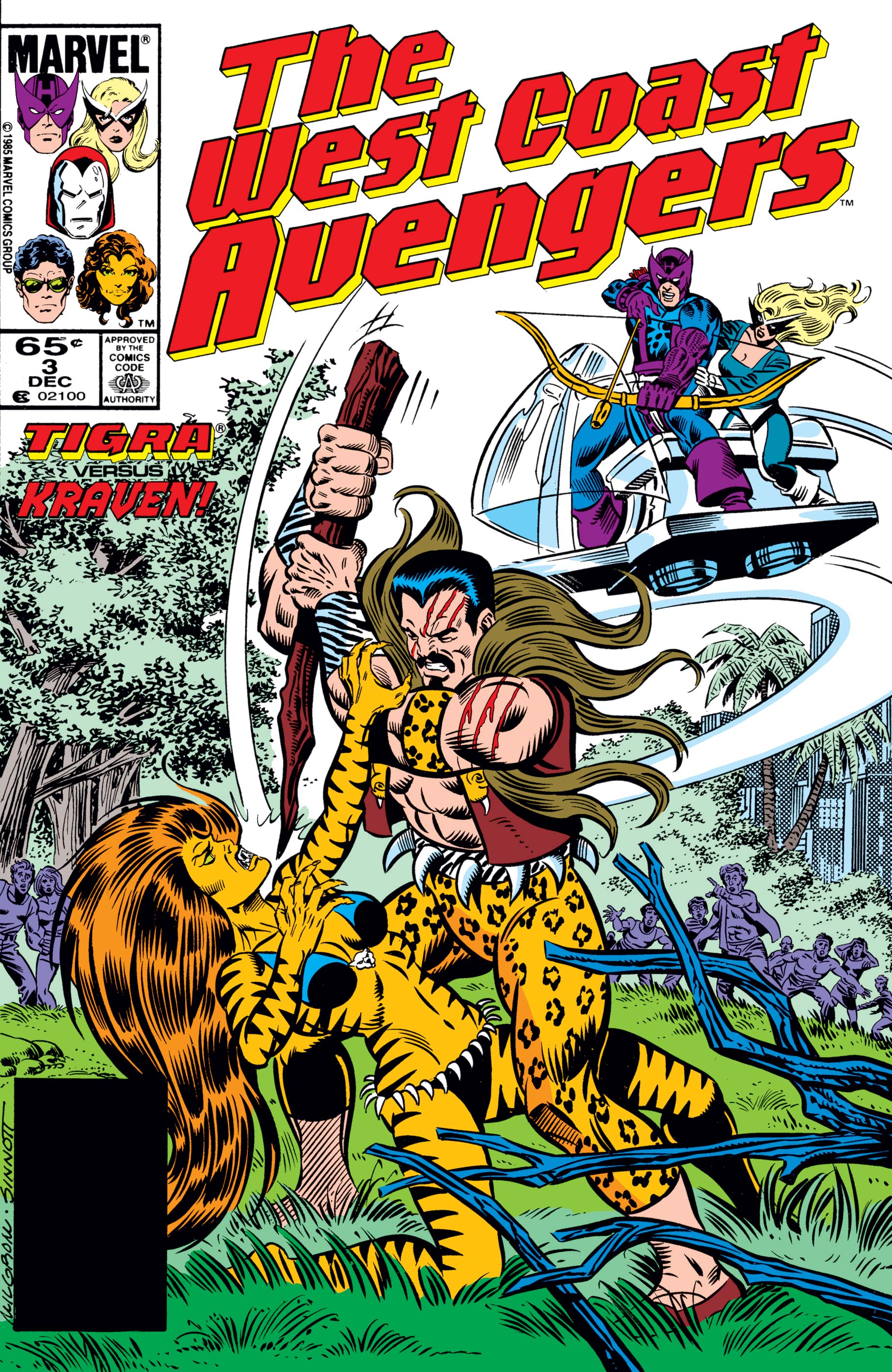
The first couple of years of WCA is driven by Englehart's mission to redeem Henry Pym and en route, he addresses the self-esteem of Tigra and Wonder Man, too. Pym and Tigra enter a relationship- which is ironic given her response to his treatment of Jan in the Shooter stories of 1981. Tigra is also portrayed as a more sexually aggressive personality because of her Cat People side. But despite a brief time when her old flame Benjamin J. Grimm joins the WCA ranks, Tigra and Pym experience a mutual co-dependency.
Tigra's struggle to control her feral nature begins with a third encounter with Kraven the Hunter. This reversion to animal instinct culminates in an attack on Hawkeye and ultimately, imprisonment in Hell (!)
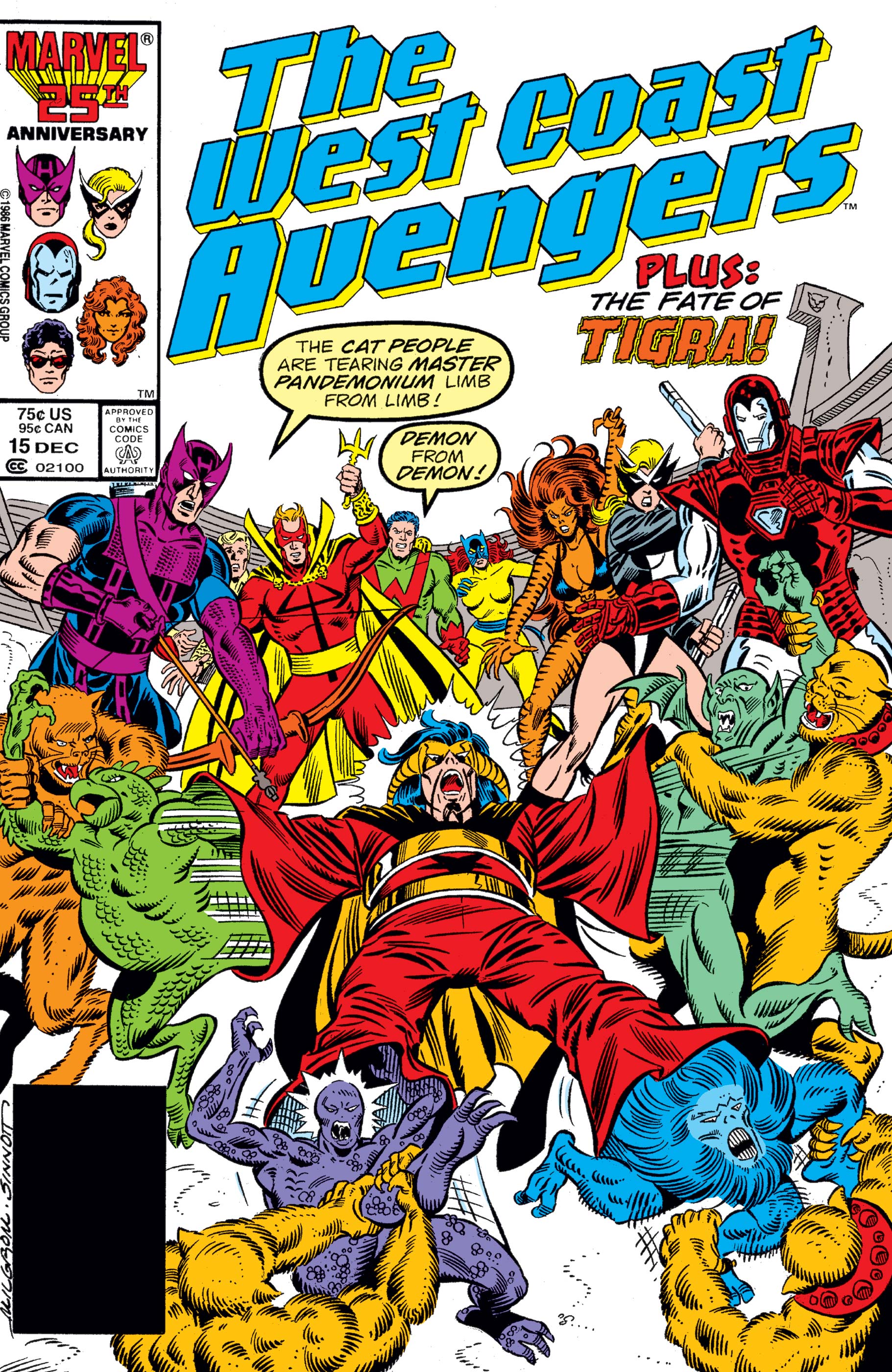
Re-enter Hellcat and her new husband, the exorcist Son of Satan, in what could be seen as a macabre foreshadowing of Patsy's own future. A reunion for Greer with an enclave of Cat People leads to her transmogrification- her cat and human selves merge and she even gains a tail. Symbolically this is facilitated somehow by wearing Patsy's Hellcat costume, even though its possibly not the original. Maybe Englehart forgot Patsy's costume was Brand Corporation property but nonetheless, it's an effective moment, a nod to her history as the Cat.

Perhaps unconsciously, however, Englehart tends to present Patsy in almost a more positive light than Greer, as Hellcat is positively appraised by her husband and she rather comically compares herself, flatteringly, to Wolverine. Also, Patsy and Greer will be seen in tiresome "catfights". This is noticeable when John Byrne takes over Avengers West Coast and a little later, Avengers itself (implementing his friend Stern's idea of amalgamating the two branches.)
Before his unceremonious departure, Englehart had split the WCA into two factions- Tigra and her then-current romantic interest Moon Knight had sided with Mockingbird, supporting her vigilante position that killing evildoers was a necessity, in certain circumstances.
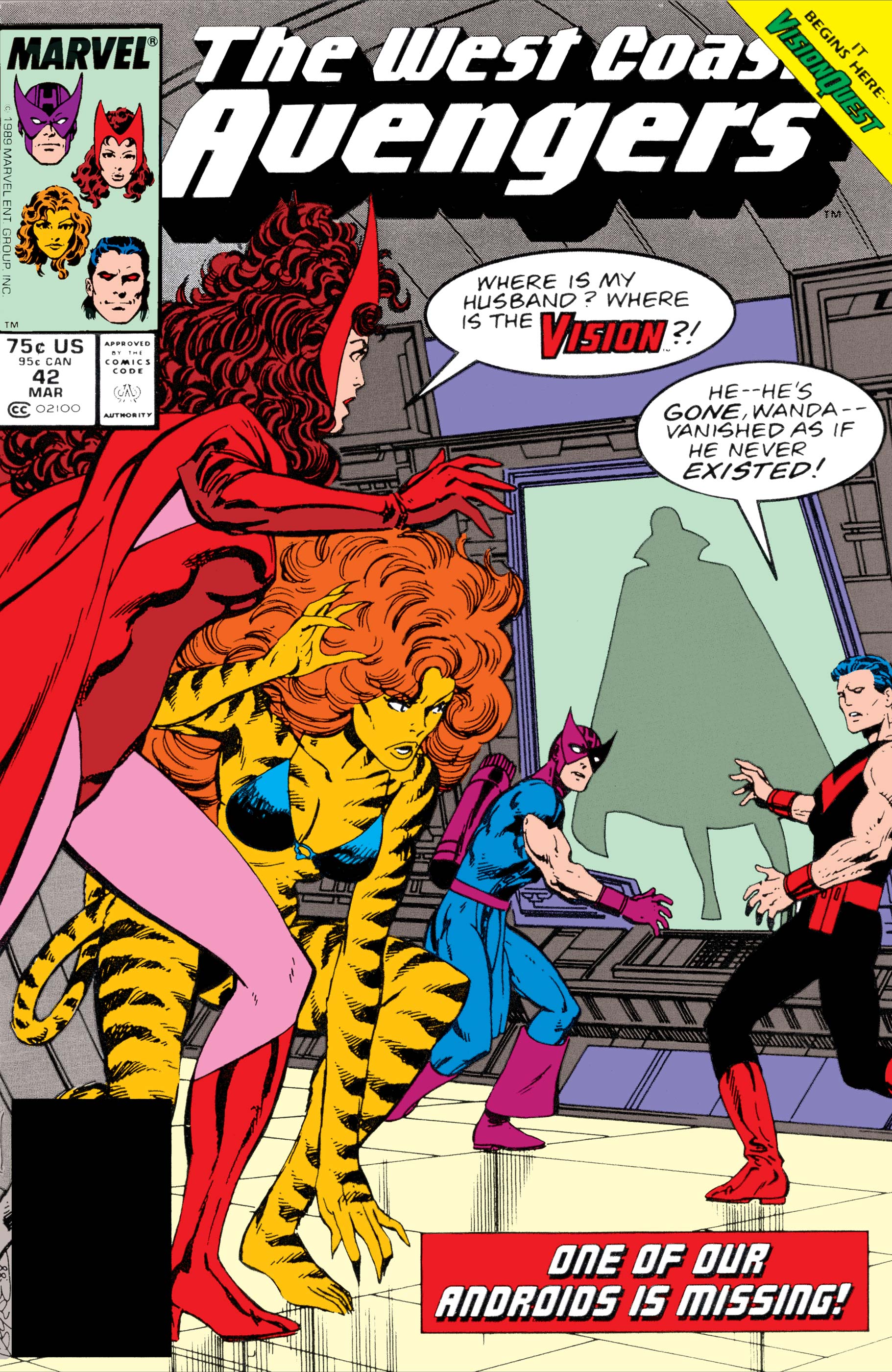
With Byrne's arrival, that plot strand was simply dismissed. As Englehart had worked to restore Dr. Pym, Byrne's purpose was to (literally) deconstruct the marriage of the Vision and Scarlet Witch. Over roughly 17 issues, he worked to make Vizh more robotic, to "villainise" Wanda- and to reduce Tigra to a feral, Harryhausen-like creature. The final indignity was having Pym of all people, shrink her to kitten-size and cage her. With a water dish.
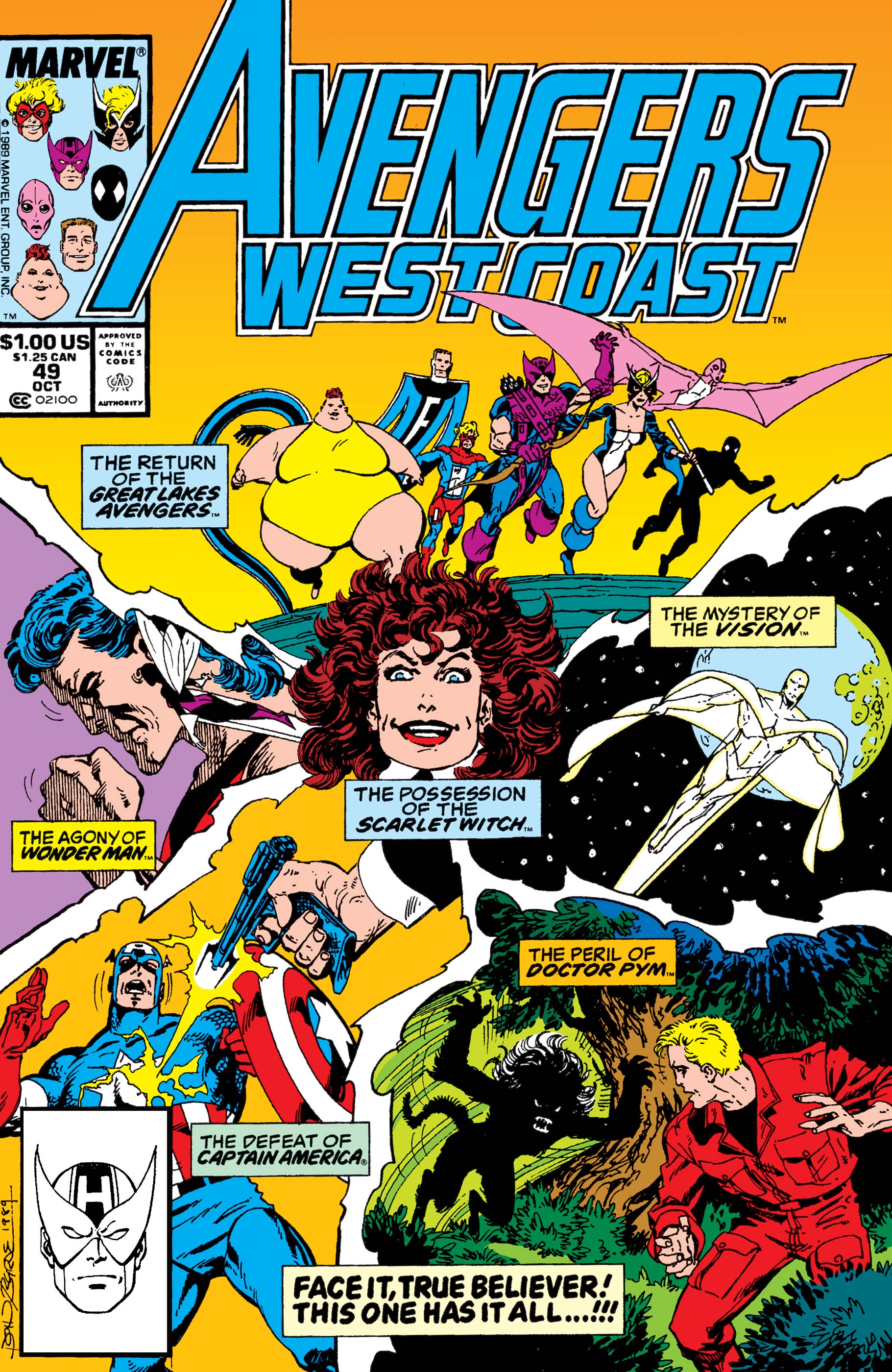
I don't understand the impulse to undo the work Englehart had done. It seemed that, like Shooter, Byrne was driven to reset Marvel to its Silver Age/Stan and Jack mode. It just seems disrespectful and a hiding to nothing, trying to turn back the clock.
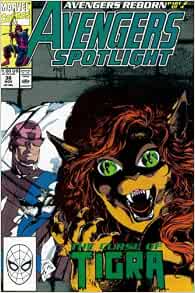
As was so often the case, however, Byrne departed abruptly in mid-storyline and left Marvel to launch his Next Men series for Dark Horse. New WCA scribe Roy Thomas addressed Tigra's fate in the spin-off title, Avengers Spotlight 38, in November 1990. Agatha Harkness gives Greer (another?) amulet which restores her human form. This time, it's not an illusion, as in the original WCA limited series.
Byrne and Thomas may have misunderstood that Tigra's Cat People side couldn't become dominant because of the Cat costume. Englehart was clear about it but perhaps Byrne simply chose to ignore it.
I had forgotten about the return of Tabur the evil New Man, who regresses to house cat form again in this story, just as he did in Marvel Premiere 42.
It's not a memorable comic and some of the beats -fighting pit bulls! Taken to the vet!- are just silly. But this story, like the Dr. Druid issue of Spotlight, restored an Avenger to her status quo for the new decade. Next time, we'll look at Tigra's adventures in the 90s: the era of Image and holofoil covers, taking in Avengers: United They Stand and Heroes Reborn.
All images are presumed copyright of their respective owners

No comments:
Post a Comment