I have made some plans for a holiday in about ten days time, if travel can be arranged. I had been thinking about Wigtownshire but the Rhins of Galloway worked out cheaper and I always feel relaxed there. But again, I'm anxious about using public transport for the first time since February.
I struggled a bit with this post because I started out to review the Tigra Compete Collection, featuring a C-list character whom I felt had had a raw deal. But it has become something of a critique of Marvel's heroines in the Bronze Age, which led, I think the whole, grisly "fridging" trope of the 90s, as identified by Gail Simone. Also, I will be negative about a couple of popular Marvel and DC creators but if I don't confront those issues, I feel this series of posts will be incomplete. And then, I can't go on to talk about First Issue Special and a whole series of Star Trek posts I had planned, et cetera. So, it might take a further three posts to untangle this cat's cradle (ho ho).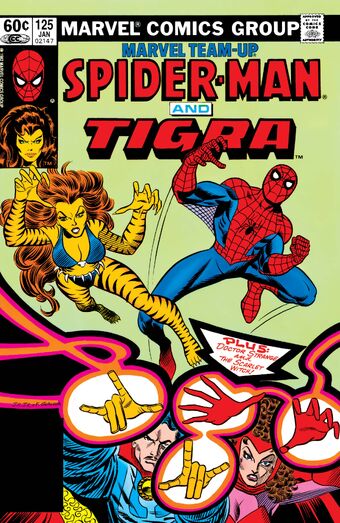
Tigra is an ex-Avenger in her next chronological appearance, in Marvel Team-Up 125 in January 1983. It's a collaboration by artist Kerry Gammill and J.M. DeMatteis, the writer of the mid-80s Justice League International. As you doubtlessly know, that partnership with Keith Giffen was hugely popular for a while; it began as a nod to the 80s US style "dramedy" genre, like Hooperman and Dream On- or, in comics, Excalibur. I keep thinking about revisiting JLI because it was so successful and I don't remember it being as amusing as anyone seemed to think. But before all that, De Matteis filled pages of the Defenders and MTU with occult themes, Bronze Age horror stars, mysticism and psychedelia that now seemed really old hat. It was the time of New Wave and No Wave and he was still punting Sgt. Pepper, Arthur Yanov and the Marrakesh Express.
In this MTU issue is yet another of De Matteis's sickly psychodramas as we discover that Zabo, the Wally Wood zombie monster from Claws of the Cat issue 1, was the brother of mad entreprenuer, Mal Donalbain, Aside from this cliched nostalgia trip, Tigra is flirty and flaky, attempting to get a gig advertising burgers. It's awful. It's like a pastiche of Steve Gerber but it's stale and tedious.
Next, Tigra suffers the indignity of being a guest star in the final issues of Spider-Woman's original run. This newcomer was a very late addition to the ranks of Marvel's supernatural stars. Originally a Hydra agent evolved from a female spider- the New Men origin rumoured for Wolverine in the mid-70s- Jessica Drew had been reworked by Marv Wolfman and Mark Gruenwald as a vampy Weird Adventure heroine in California. This of course was formerly Tigra's territory and as with Tigra, Chris Claremont had done some work to give Jessica some feisty agency. But in the death-throes of her own series, Jessica clashed with Tigra and they both became captives of a Z-list villain, Locksmith, for some tedious Master Jailer-type bondage.

I'd argue that Spider-Woman had an even more ignominious fate than Tigra- at the end of her own series, Jessica is written out of existence. It feels like another of Shooter's destructive acts towards any Marvel character created after 1970. Happily, the following year, this is undone in the Avengers, although Jessica loses most of her powers. While Tigra is lacking in confidence and fearful- as Avengers leader, the Wasp encourages her- it's Tigra who, having been haunted by Jessica's astral body, enlists the Avengers and Dr. Strange to rescue her from Morgan le Fay. This story arc is also important because it marks the point where an increasingly megalomaniac Vision decides to expand the Avengers with a west
coast branch.
.
I read my friend Graham Sim's issues of Defenders and Avengers between 1981 and 1984. I was buying far more DC titles then ( Alpha Flight ,X-Men and New Mutants aside). I never warmed to the Roger Stern/ Al Milgrom team. Stern utilised as much Marvel lore as Gruenwald or Englehart, but his plots seemed more about continuity fixes (like Gruenwald) and less about the emotional soap operatics of Englehart- which I preferred. I cared more about the emotional lives of the Avengers than Project Pegasus's operational structure. And the stiff cartooning of Milgrom left me cold.
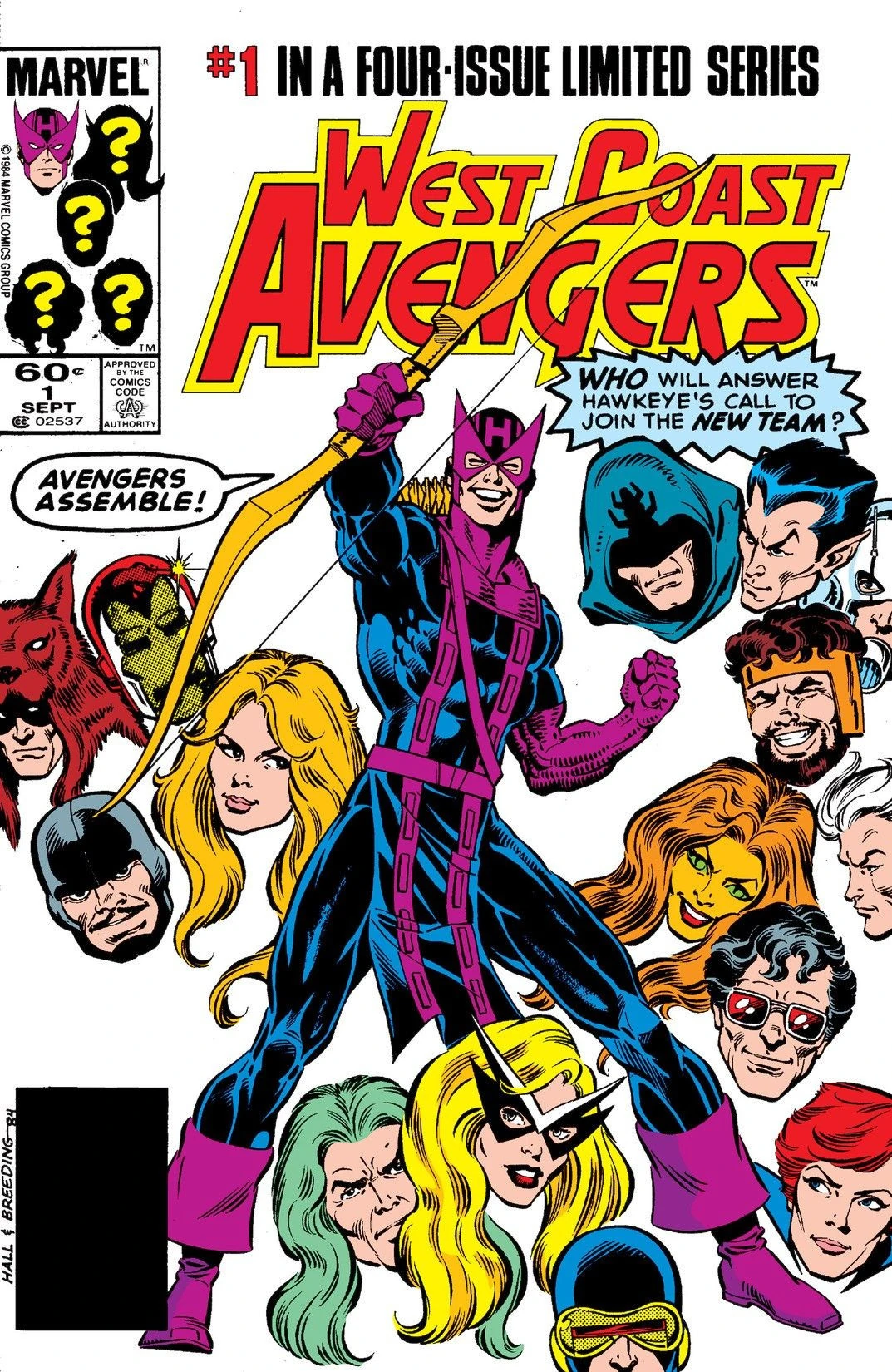
Stern, through the Vision, introduced the West Coast Avengers in a miniseries- which, even in the autumn of 1984, was still a popular and effective gimmick. Initially, DC had used them as "get up to speed" primers for readers with Untold Legend of the Batman in 1980 or Secrets of the Legion of Super-Heroes. Then, they became spin-off platforms for team books like Tales of the New Teen Titans or the Frank Miller Wolverine. Here, Stern was trying to get control of some Avengers characters before they were taken off the table by other editors. He was then planning to mix and match characters in one comic, not to create a spin-off.
It always amused me that, at the height of the New Teen Titans popularity, Marvel aped the Titans West group from the brief 70s revival.

Aside from Iron Man - and Stark is replaced by Rhodey here- the WCA isn't a powerful group. It's also disappointing that Batman-analogue the Shroud doesn't join. His mysterious, pulpy vibe wold have given the team an edge. However, the first arc pits the team against Graviton, a dull Shooter villain who's a place holder for Magneto while the latter is the reformed character of the Claremont books. The clash with Graviton resolves some of Tigra's anxieties, which she shares with team-mate Wonder Man. She reveals her human Greer form to Simon but says it's an illusion. I finally understand how the "were-woman" tag works and she also says the Cat People are "all gone now"... for "over a year". An editorial note says "Remind us to tell you about it sometime" but I don't know if they did.
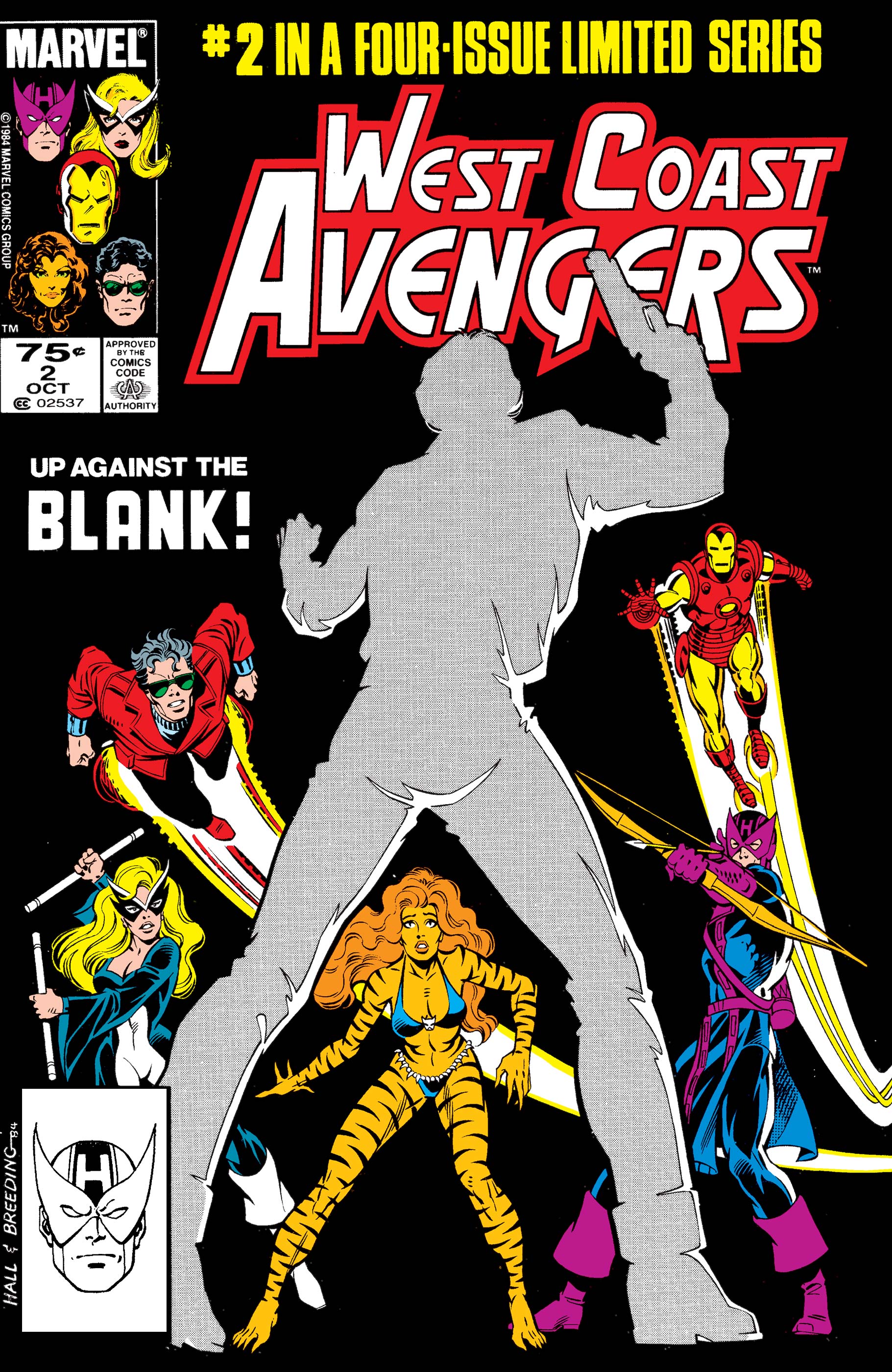
Tigra also discusses Stark's secret with Rhodey, which in turn encourages him to reveal his identity to the team. In the final issue, Tigra impersonates Madame Masque to infiltrate Graviton's retinue, It's a risky and courageous step and one I wish she'd tried more often. It would also have been an interesting contrast with the Shroud's ganglord imposture. It also repairs some of the damage done by the preposterous leg-warmers scenes in issue 3!
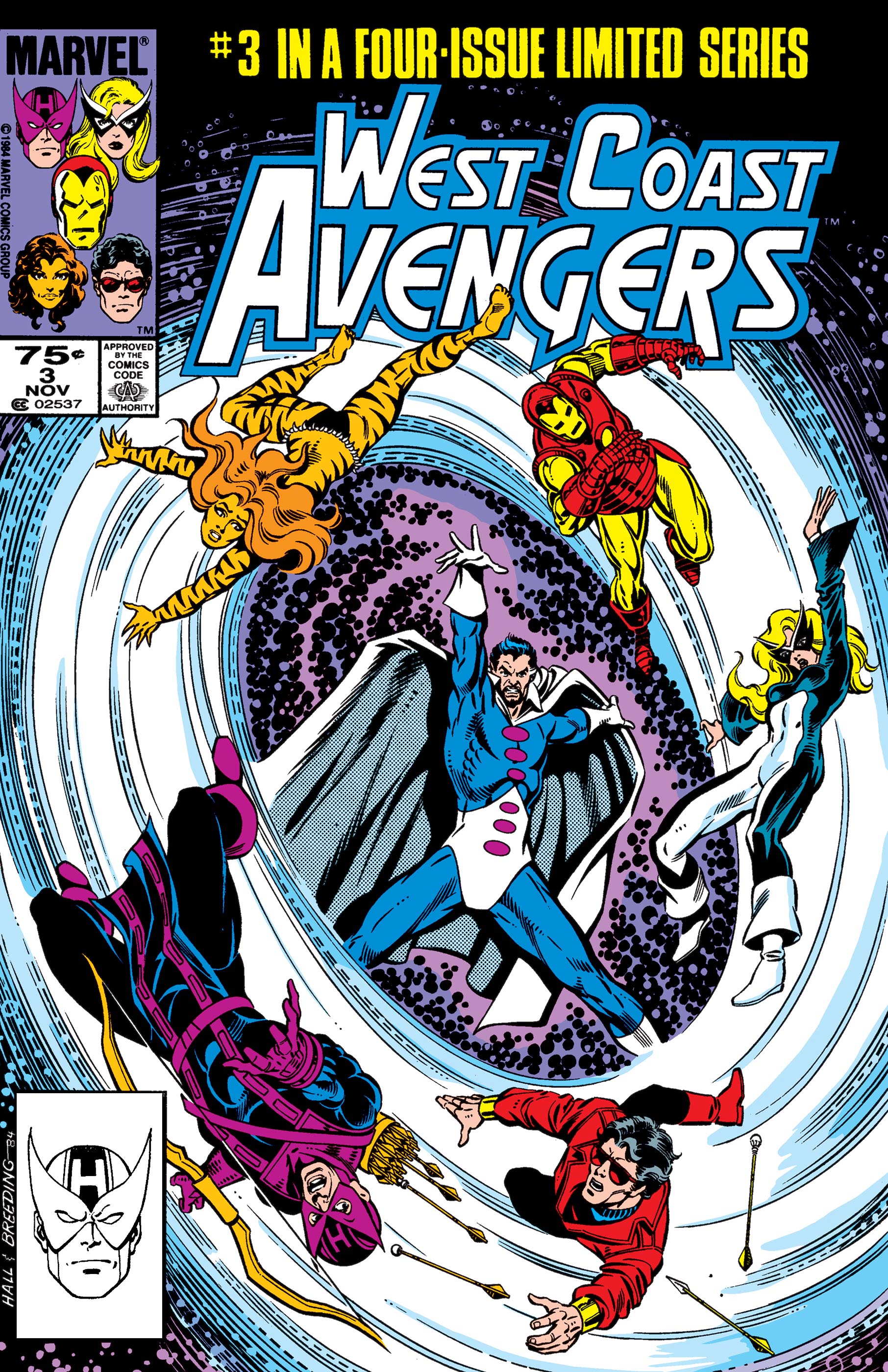
Although the art by Bob Hall is better than during the Shooter era, I like to imagine how good the series might have been under a Gene Colan or Jerrry Ordway, making use of LA architecture. But they were working for DC at that point. Minor crook the Blank is much more suited to Spider-Man and only points up the roster's lack of power. But kudos to Stern- he gives Hawkeye an internal monologue recalling the days of Cap's Kooky Quartet.

In their next appearance, Avengers 250, Tigra gives the new Captain Marvel a pep-talk, based on her experience with Ghost Rider's hellfire, which is a nice characterisation bit. It seems Stern was making an effort to rehabilitate Tigra after Shooter's "scaredy cat" portrayal. But his expansion team was more successful than he had anticipated, as we'll see in the next post, and whatever plans he might have had for Tigra didn't come to pass.
All images are presumed copyright of their respective owners.

No comments:
Post a Comment