
Last time, I said I thought the Claws of the Cat might've been more successful had it appeared four or five years later, in 1976 or '77. Of course, the Cat was always going to be eclipsed by the famous Catwoman, the fetishistic femme fatale from Batman, who incorporated she-devil tropes from racist stereotypes like Sax Rohmer's Fah Lo Suee or Milton Caniff's Dragon Lady.
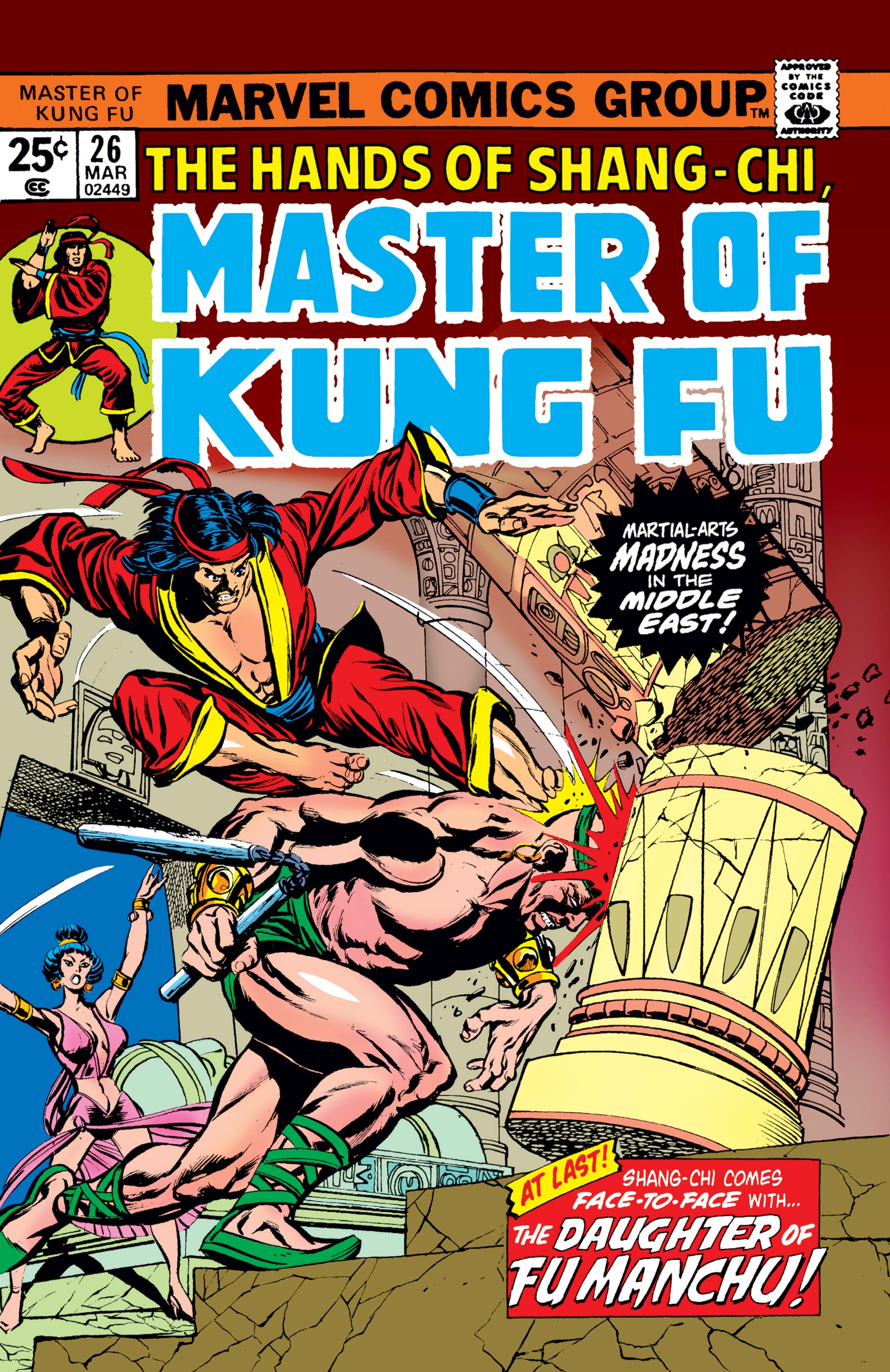
In 1974, aside from sinister Satana in the horror mags, there were no female super-heroes in their own feature at Marvel, although the Black Widow, modelled, like Wonder Woman Diana Prince on Emma Peel and Modesty Blaise, shared logo-space ( and second billing) with Daredevil.
There had been butch "Women's Libbers" created by Roy Thomas and Gerry Conway: the Amazonian Thundra and the valkyries Hildegarde and, uh, Valkyrie. The Kozmic Kosmos of Englehart and Starlin featured the strident Scarlet Witch, the enigmatic temptress Mantis and the aloof, exotic Space Buddhist Moondragon. But they were all defined by romantic relationships with the Vision, Swordsman and Daredevil. The Invisible Girl, as she would be named until the 80s and the Wasp were also defined by the husbands and the aforementioned Valkyrie and Mantis were involved in quests to establish their true identities, where husbands and fathers (Jack Norris, Libra) often had more agency.
In reviving the Cat, Marvel creators undertook a process that had worked for the Black Widow, Captain Mar-Vell, the Beast and Hawkeye. The character would be revamped ( no pun intended) with a complete change of visual and name ( as was the case with Hawkeye/Goliath).

By 1974, Marvel had launched two Vampirella rip-offs: first, as previously mentioned, Satana, the Devil's Daughter and in June of that year, Lilith, daughter of Dracula. These alluring succubi were more villain than anti-hero but they, and Lillitu, a demoness in the May 74 issue of Conan the Barbarian, may have been influences in the development of Tigra the Were-woman ( a meaningless but catchy nomenclature). Greer Nelson would be incorporated into the horror craze that began with Tomb of Dracula and at DC with Joe Orlando's House of Mystery.

My introduction to Tigra came with the back cover of the sixth issue of FOOM Magazine- the first issue of my second subscription, in the late spring or early summer of 1974. I was eleven and unaware of concepts like "cheesecake"or the more modern "fan service" and I didn't read about her in a comic until the spring of 1976.
The return and demise of the long-lost Cat took place in a horror title: July 1974's Giant-Size Creatures 1, a series where the numbering continued as Giant-Size Werewolf By Night. This story, "introducing the fanged fury" of Tigra, is by Tony Isabella, regular WBN penciller Don Perlin and Vinnie Colletta. Unlike her image in FOOM, Tigra has stripes including facial markings and emerald cat's eyes but does still have little cat ears, like Julie Newmar.
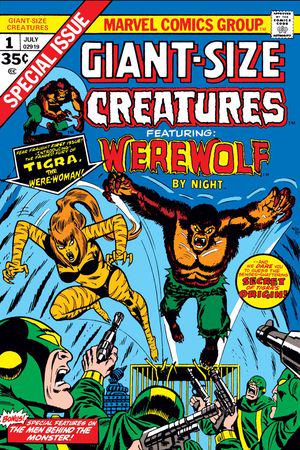
Jack Russell, the eponymous werewolf, tries to rescue Greer from Hydra agents on a Mexican beach, The locale is unusual for both characters and Hydra is an atypical MU crossover for WBN. Greer uses a magic ring to transform into her feline form but both Were-woman and werewolf are subdued by Hydra.
In an eight-page flashback/origin sequence, we discover how the Cat developed radiation poisoning trying to rescue her mentor Dr.Tumolo from Hydra agents. Greer's life is saved in a mystic ritual which transforms her into the warrior avatar of a secret race of Cat People, of which Dr. Tumolo is a secret member. The Cat People also created a bio-weapon to protect them from humans and Hydra want to possess it.
Like the Man-Wolf MTU story in a previous post, the Werewolf is attracted to Tigra and helps her, in his animalistic way, to free Dr. Tumolo, who releases the bio-weapon- it's the Black Death (!) in a gaseous state. She also suggests that Greer is trapped in her Tigra-form, as the ring appears to have stopped working.
While the theme of the story ( the conflicted nature of the lycanthrope, armaments and racial oppression) are all interesting, Dr.Tumolo's actions seem out of character, even though we now know she isn't really human and it casts new light on the nature of the experiment which created the Cat. Isabella's invention of yet another hidden race- like the Inhumans, or the Atlanteans, Lemurians, Red Raven's winged people, the Lava Men, etc. etc. surprised and disappointed me. Logically, the Cat People could've been the High Evolutionary's New Men ( but then the original Spider-Woman- and possibly Wolverine- would've been invalidated). Adding yet another race of mystical, advanced beings to Marvel-Earth seemed a shade redundant.
The art is very much in the vein of Marvel's Bronze Age output- simple and cartoony but it's not unappealing. The dialogue of the Hydra agents is quite comical: one, clearly 70s hip, shouts "Hail Hydra, baby!" while another (in a different panel) laments "Gad! I fear Hydra's ranks are being refilled solely from the baser classes..." Isabella used Hydra ( and the Circus of Crime and the Maggia boss, Silvermane) in Daredevil in the spring of 1975, and even wrote a Hydra history essay in the letter columns. He clearly enjoyed working with Marvel continuity- it's just a pity he never stayed on a title for any length of time (Power Man perhaps being an exception).
Isabella was also trying to bring a contemporary, urban sensibility to dialogue, baby: Tigra/Greer is also hip and confident. She has been saddled with Ben Grimm's dilemma but the magic ring will work again when she joins the West Coast Avengers, a decade later. It's a matter of taste, perhaps, to decide whether her bikini costume is more titillating than her form-fitting catsuit.
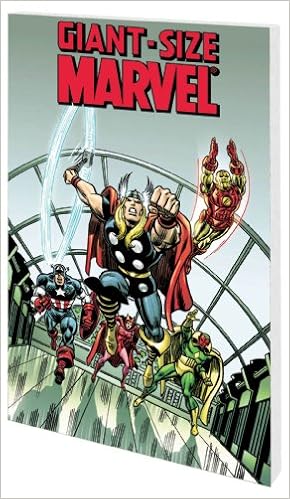
I first read this story in Giant-Size Marvel , a trade paperback featuring the Buckler Nuklo/Avengers story, the debut of Madrox , the Morbius/Man-Wolf team-up and other Bronze Age giants in 2005. The text pages reprinted in Tigra The Complete Collection describe Duffy Vohland's idea to revive the Cat and depicts Gil Kane's original character design. Tony Isabella wanted to call her Hellcat but Roy Thomas suggested Tigra the Were-Woman and the mystical elements of the Cat People. In Foom 9, March 1975, nine months after GSC1, Isabella said Tigra would be the regular feature in Giant-Size Chillers, drawn by Mike Vosburg and a story would involve Jack The Ripper.
Next time, we'll see what happened to Tigra as the horror craze boom went bust.
All images are presumed copyright of their respective owners

No comments:
Post a Comment