Shooter seemed to have two objectives with Avengers: restoring the status quo to the early Sixties ( a formula which gained acclaim for John Byrne's charming but verbose Fantastic Four) and examining the fall from grace of superheroes. He had attempted to explore this theme with Jean Grey/Phoenix and in Avengers, he focused on Moondragon, Hank Pym, Ghost Rider and Tigra.
The grimly logical downfall of Henry Pym is the most notorious variation on this theme but today, I want to explore the undoing of the other three characters.
As I wrote last summer, Mantlo's new Avengers roster would shake up one largely unchanged for half a decade: the Vision, Scarlet Witch, the Beast and Wonder Man, as Marvel characters without any other home, had been popularised by Englehart, Shooter himself and Michelinie. Gerry Conway's Justice League Detroit ( the core concept of the Flash tv series, in recent years) made a virtue out of characters in that situation.
Mantlo seems to have wanted to amalgamate the defunct Champions with the original Lee/Kirby Avengers. Black Widow and Hercules had been guest-Avengers in the Sixties while Angel and Iceman were classic X-Men and Lee/Kirby Kreations. These additions were all in keeping with the retro sensibility of the Shooter Era at Marvel.
There are echoes of this assemblage,then, in Shooter's return to scripting in the September 1981 211th issue of the Avengers. I read my friend Graham Sim's copy that August. The 80s and my late teens had rung many changes:I had left Hamilton Grammar School earlier that summer;I was about to accept an offer to go to Strathclyde University before a second, family holiday in Amsterdam. The Windmill coffee shop had opened in our village on the main road; I was buying comics by mail order but you could still get them in John Menzies in East Kilbride and Lewis's in Glasgow. With my discovery of the Exchange and Mart, I was becoming a collector and I was also enjoying the New DC comics more than Marvel. Many of DC's new creators had left Marvel because of Shooter's management style.
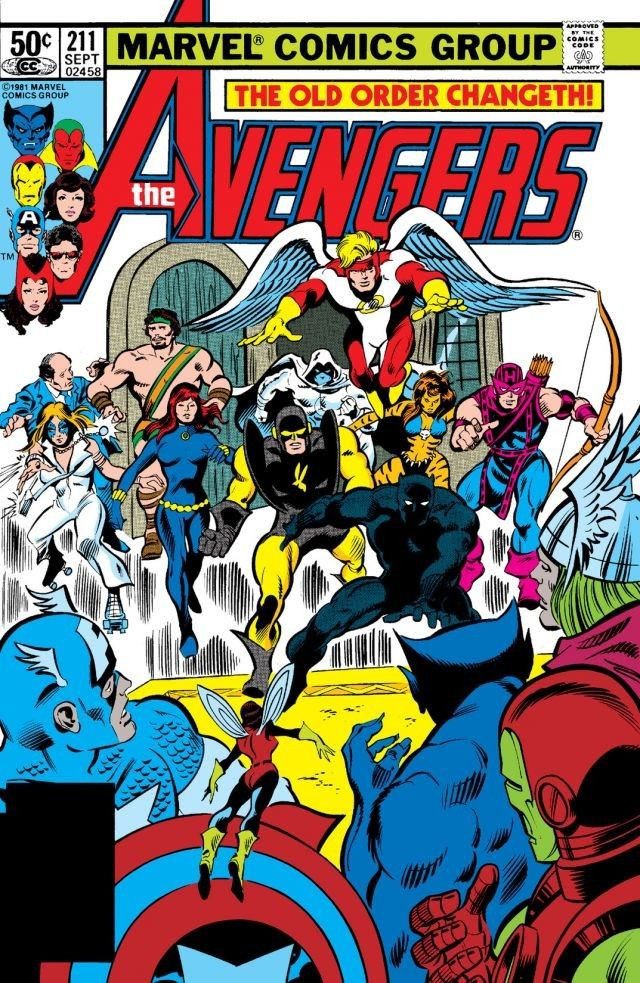
One of these would soon be Gene Colan, whose final Avengers issue is 211. In addition to the regular Assemblers of the period, he has to draw the Champions (sans Ghost Rider) Yellowjacket, Hawkeye ( occasional guests in the Michelinie/Byrne/Perez issues from 79-80), Black Panther ( another 60s mainstay), newcomers Dazzler and Moon Knight- and Tigra.
The story opens with Captain America demanding that the team becomes more "lean, close-knit" as a sextet, although the limit has been seven for the past five years, effectively. However, the Titan priestess Moondragon has an agenda of her own and summons a further ten heroes to Avengers Mansion. They "audition", sometimes by skirmishing with each other. In the aftermath of the melee,everyone departs, except for Tigra. The Beast and the Vision's "family" including the robot Jocasta ( Shooter's creation!) resign and Yellowjacket, an original Avenger, rejoins.

The arc of the next half a year is Hank Pym's insecurity, bitterness, and violence. It's an ugly story ( and Bob Hall's art is ugly too, I'm afraid, with tiny panels. I dislike the Alan Weiss issues also). It's also one that is intertwined with that of Tigra.
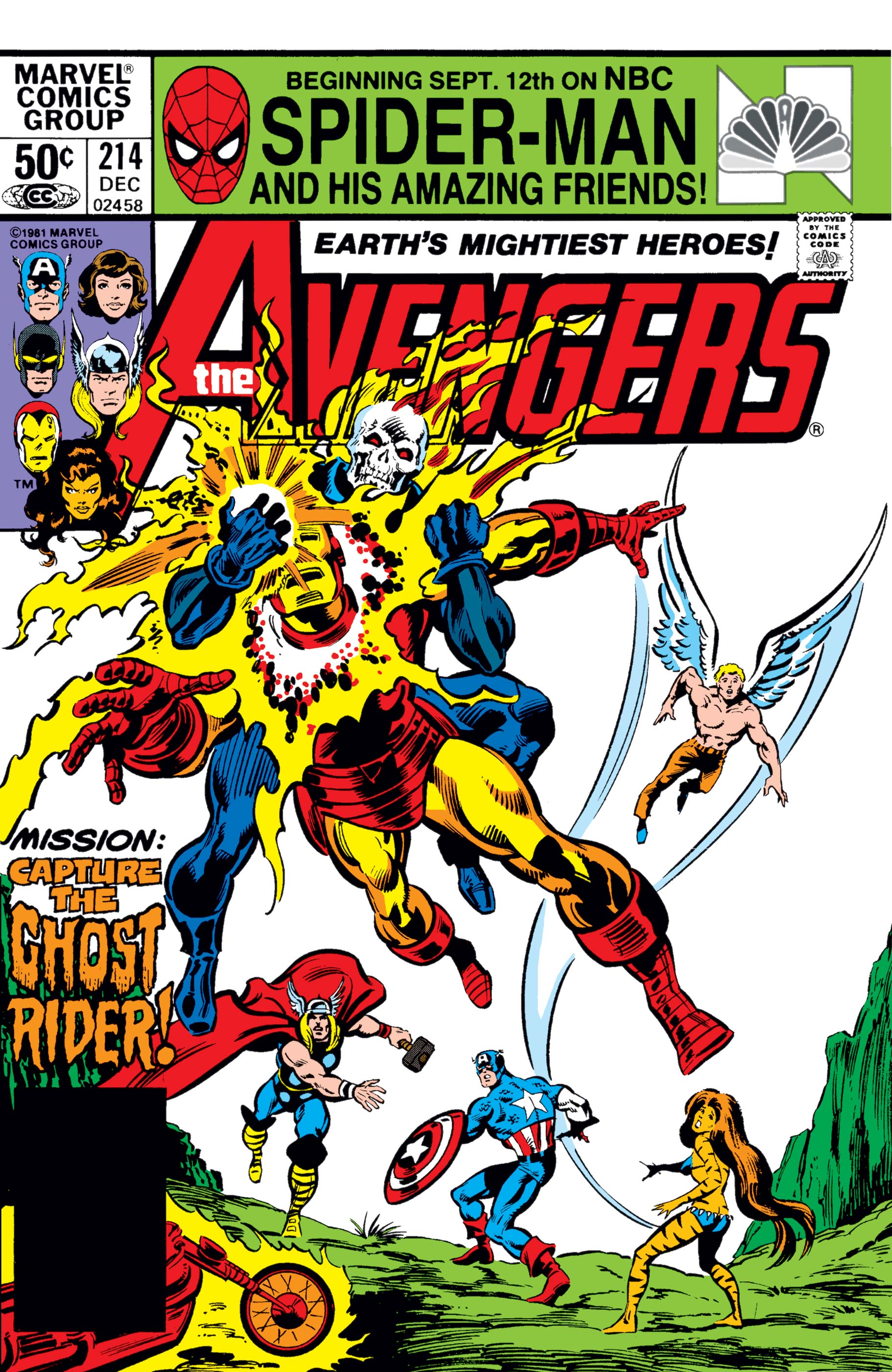
There are three important incidents in the arc that impact on Tigra: before the Elfqueen encounter, which cleverly mimics the relationship of Hank and Jan, Greer senses something off about Pym. This might be a callback to her empathic ability.
In the wake of Yellowjacket's court martial, Tigra is burned by the Ghost Rider's Soulfire. GR is another mirror of Pym; another character who turns on his allies- but his problems are demonic, not psychological. Ghost Rider is really the only survivor into the 21st century of Marvel's Bronze Age infatuation with Satanism. While that's partially down to an agelessly cool visual, I think Shooter gets some credit for pushing the character away from his brief super-hero phase.
Unfortunately, there's no reference to GR and Angel as Champions and former team-mates. Although Angel had just quit the X-Men over Wolverine's psychotic behaviour and was thinking about Avengers membership in 211, this clash with GR seems to put paid to that line of thought. I don't know what another flying tycoon would have brought to this line-up, in any case. Banshee always struck me more as Avengers material.
The third, climactic incident is when Tigra is treated as a pet by the Molecule Man, who appears to have killed her teammates
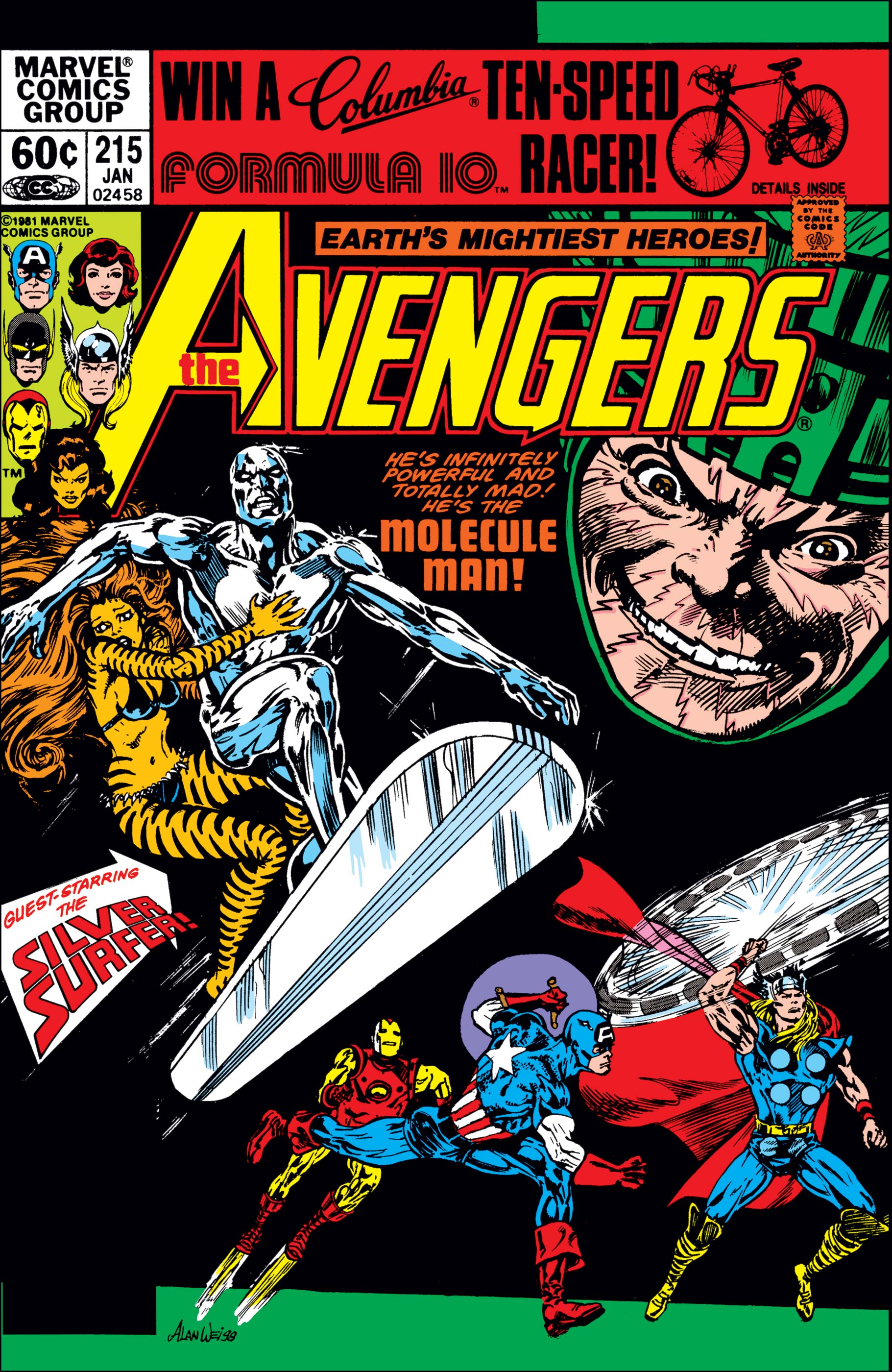
.In the process, Greer learns the secret identities of her fellow Avengers and saves the world from the Molecule Man- by talking him into getting therapy. It's a remarkably logical and real-world response to a cosmic entity with childlike impulses- a menace beloved by Shooter and revisited in his Secret Wars II.
Nonetheless,Tigra resigns, feeling inadequate and insecure, although that's largely the effect of the Soulfire.

Shooter's skill as a plotter and his ability to explore character through allusion are really impressive in this unhappy period. But his portrayal of Tigra really demeans Marvel's first feminist superheroine. She flirts with Jarvis the butler; she's avaricious- the Avengers stipend is the most important element of the role for her; she dons a rhinestone cowgal outfit and she's also pawed in public. The Beast's groupies were presented as a bit kinky and comical whereas Tigra is literally a submissive sex kitten.
I'm reminded of Russell T. Davies creating Adam - the "Companion Who Couldn't"- in his first Doctor Who season. Tigra appears to have been placed on the team to be the Avenger Who Couldn't.
Yet, in terms of powers and abilities, she mimics the Black Panther and the Beast, so she's certainly capable enough to be an Avenger. But she'll be replaced eventually by the She-Hulk, a similarly body-confident but more ostensibly absurd and an undeniably more derivative character.
Towards the end of Shooter's second tenure, Moondragon attempts to bring universal peace through mental domination, seduces Thor and is tried by Odin. She is then released into the protective custody of Valkyrie in the New Defenders. Her hubris and her attempted murder of her father, Drax the Destroyer, make me wonder if Shooter perceived her as another "disposable character". There seems to me to be a crossover between ambiguous or conflicted female characters created in the Seventies and Shooter's list of the disposable- Tigra and her thematic ancestresses, Satana and Lilith, being other examples. It really feels like the vampy warrior women of the 70s Headshop Kozmic are being retired and replaced by the "Point and Faint" enchantresses of the Sixties, created by Stan and Jack.
Despite Storm's leadership role in the X-Men and the Wasp's ascension to Avengers chair, 1981-83 is not a hugely positive time for Marvel's heroines. We haven't even touched here on the egregious fate of the original Ms.Marvel. But while that might have been mitigated by the debut of Binary and the second Captain Marvel, it's the redemption of Tigra we're looking for. It's also inextricably linked to that of Hank Pym, as we'll see...
next time.
All images are presumed copyright of their respective owners.

No comments:
Post a Comment