Tigra the Were-Woman was originally called Hellcat. In the spring of 1976, a new/old heroine with that name made her debut in Steve Englehart's last Avengers epic ( before he departed for DC).
Englehart had been satirising American politics and corporate culture, while affectionately parodying DC's Justice League. He then inveigled teenage romance starlet Patsy Walker into his pastiche of the annual summer crisis for the Super Friends.
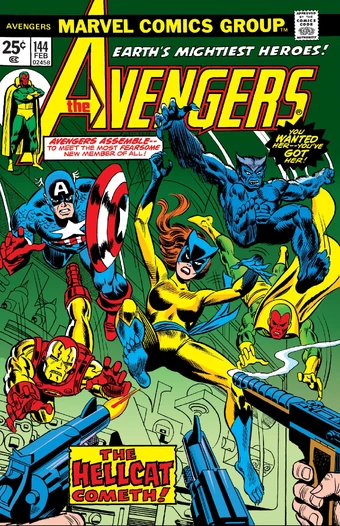
Patsy adopted a version of Greer's Cat costume - imagine Betty or Veronica becoming Batgirl- but didn't join the Avengers, in the end. Instead, she became a mainstay of the Defenders ( for longer, I think, than Greer's tenure in the Avengers); married the Son of Satan; died and was resurrected and befriended the Valkyrie and the She-Hulk,
Roy Thomas had pioneered this approach in the late Sixties, with Goliath and Yellowjacket- different costumed identities of the same character, co-existing at the same time. We'd see it again and again, with heroes as diverse as Ant-Man and Spider-Man's Slingers.
One could argue that Patsy has been more successful than Greer, with three short-lived series and also having featured in the Jessica Jones tv show as Trish Walker. That's a bit dismaying since Hellcat has always been portrayed as a more ditzy, cornier heroine than Tigra and when they've crossed paths, they've clashed. But more about that another time.
Despite Greer's ties to her Cat identity now cut, thanks to Patsy, it was still being referenced in the first person introduction that graced the three remaining issues of Marvel Chillers. Like other horror-flavoured heroes ( the aforementioned Son of Satan and Ghost Rider), the final note was of the threat to Greer's soul that her Cat People transformation might cost.
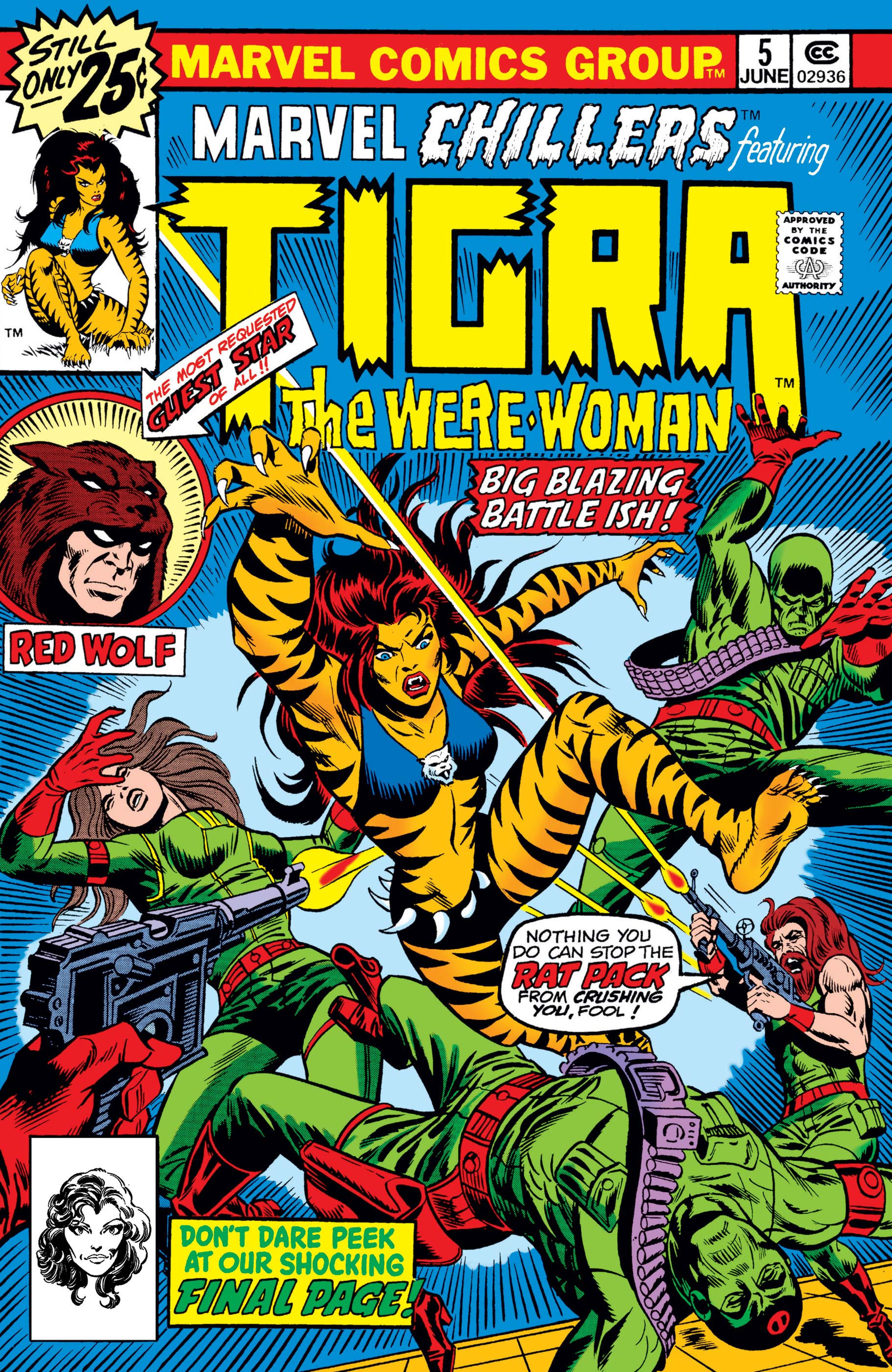
MC 5 (no pun intended) was my second and final issue. Again, it's drawn by Will Meugniot and looks different to the prevailing Marvel house style. Tigra confronts the Rat Pack, in particular the "self-styled Madame Menace", Marie DuChailu, formerly "crime queen of New Orleans". This is a different character to Sunset Bain, villainess of the Ditko Machine Man series of the late 70s. M.Menace I has the potential to be a recurring enemy.
The Rat Pack's slaughter of a Native American village involves Red Wolf, the Avengers ally, who is pursuing the criminals to retrieve a stolen artefact, the Soul-Catcher. Red Wolf, a 20th century man who has lived in New York as a construction worker, speaks in the same Noble Savage idiom as his jungle counterpart Ka-Zar. He refers to Tigra as "woman" throughout. It's bizarre and patronising. However, Isabella creates tension with the squabbling Rat Pack members and the mysterious powers Joshua Plague can wield with the Soul Catcher, a wand-like carved object.
MC6 is Isabella's last script for Tigra. John Byrne provides the art- it's an early job for him but there are lots of energy blasts, some high tech set dressing and lots of snarling close-ups. It's pacy and angular.
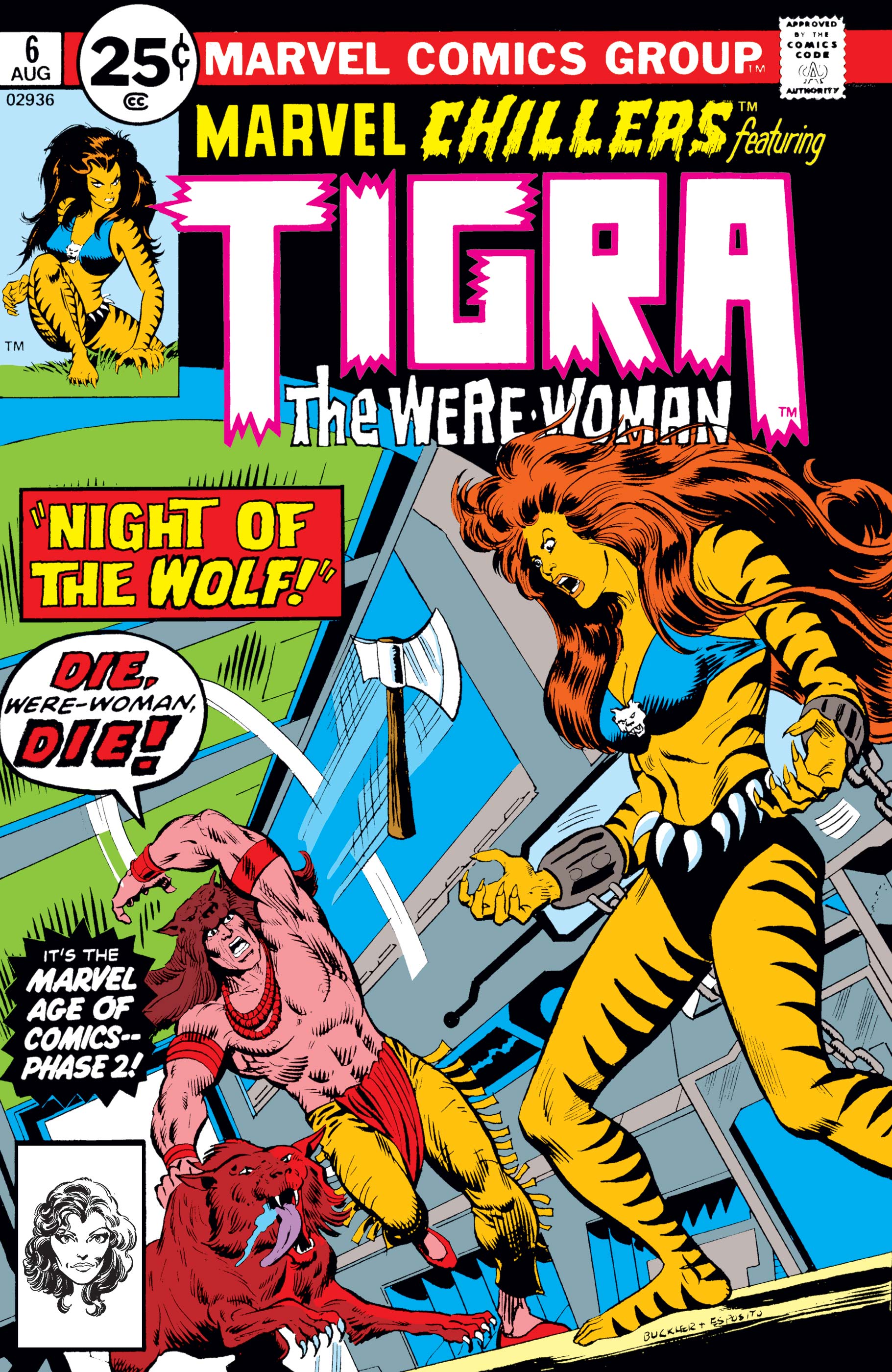
Tigra and Red Wolf team up and there are three revelations: Plague's toadying Number 5 is a robot; new cast member and ally to the Cat people and the "Indians", Jules Bannion is a Rat Pack spy and Plague himself is the Super Skrull, a villain Byrne will re-use in Alpha Flight and Namor stories. The clues have been skilfully placed by Isabella- hypnotism and a fetish for disguises, even a "Kree scum "slur.
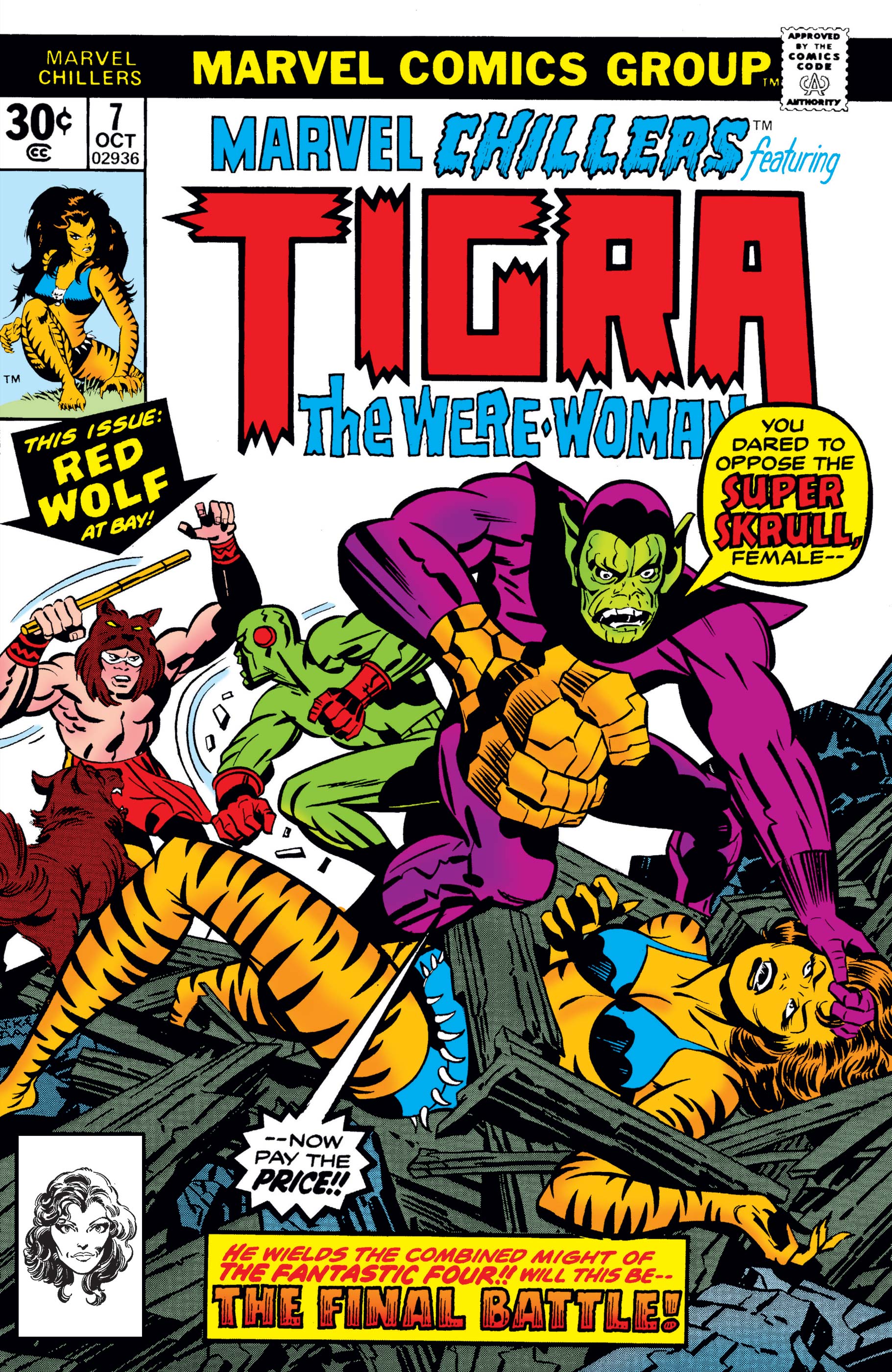
MC7 is the final issue and it's very Bronze Age: a Jack Kirby cover, interior art by George Tuska and an early Marvel script from Jim Shooter. His voice for Tigra is a bit less hip and cynical to me and I think this marks a shift in how the character will be perceived. The story becomes a bit laughable. Super-Skrull burns Lobo alive! No, it's another wolf, seemingly from nowhere. Super-Skrull impersonates a police officer to obtain the Soul-Catcher! He somehow knows what a police stolen goods report is.
However, Shooter does reference the Skrull's previous clashes with Captain Mar-Vell, Thor and the Fantastic Four when he's ranting- just before the Soul-Catcher absorbs his essence, trapping him inside. After discussing her fears about her "animal spirit" with Red Wolf, Tigra departs, literally into a new dawn. Now she's in California, would Isabella have had her join the Champions in LA? Perhaps, but he's gone to DC to create Black Lightning, his most enduring character. It's a bit of a disappointing outcome for Isabella's "vital" new heroine and Marvel's only surviving Native American hero.

Tigra next appears in the pages of Marvel Two-in-One 19, cover-dated September 1976. Like MC, this is a comic I bought at lunchtime or after secondary school in Craig's in Strathaven. I'd say it's even more like DC's Batman vehicle The Brave and The Bold than Marvel Team-Up as the Thing can be partnered with virtually anyone, in as whacky a story as you like. The comic began with a run of increasingly bizarre stories by Steve Gerber and a couple of issues by Chris Claremont. At this point, it was written by journeyman scripter Bill Mantlo.
This is a disappointing filler issue that makes little sense. The Cougar is a renegade Cat Person, disguised as scientist Curt Ranklin,who has stolen the Null-Bands that powered Tomazooma ( which was a Russian robot, IIRC).
It seems a whacky choice for a start then he's shot in the back by industrialist Sheila Conklin, fiancee of Ranklin. If they had married she could've been Sheila Conklin-Ranklin. Huh.
The villain looks a little like the Man-Wolf under Sal Buscema's pen but the fact that the heroes are just gassed repeatedly and have no agency then the whole scheme is undone by a betrayed, vengeful fiancee who's appeared in eight panels is pretty woeful. It also immediately robs Tigra of a costumed villain nemesis.
If the McGuffin had been the Soul-Catcher, it would've have been tidier- the FF connection would then have been the imprisoned Skrull. It would also lay the foundations for the next phase of Tigra's career, as we'll see next time.
All images are presumed copyright of their respective owners.

No comments:
Post a Comment